FMCG Trade, Built for Small Merchants
Tradepay buys FMCG inventory from suppliers and resells it to groceries, mini-markets, and small retailers on deferred commercial invoice terms.
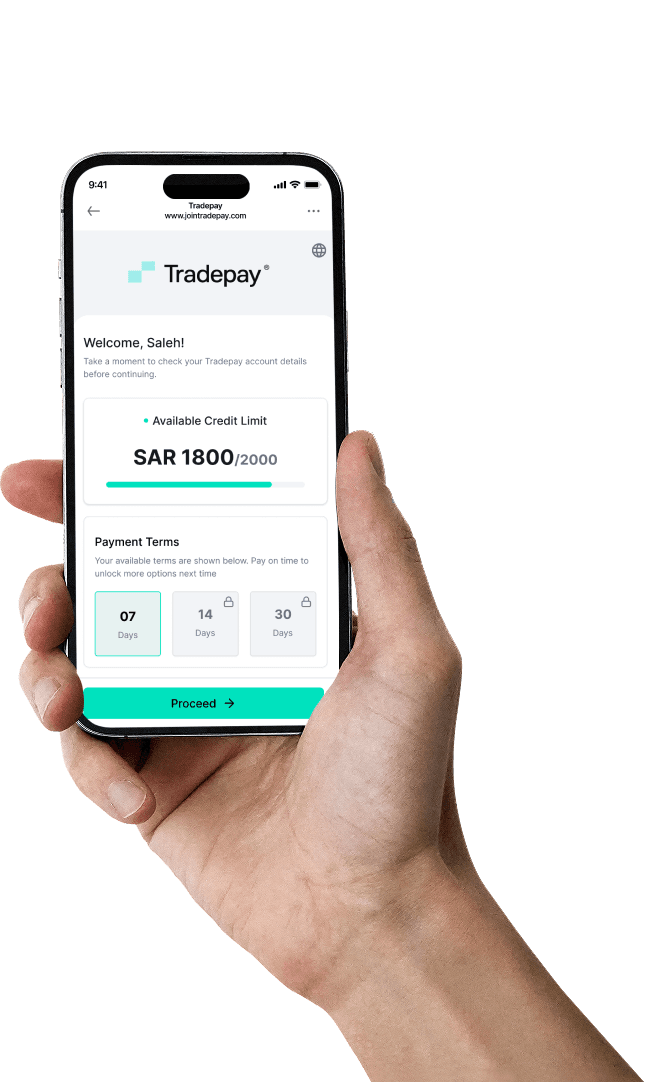
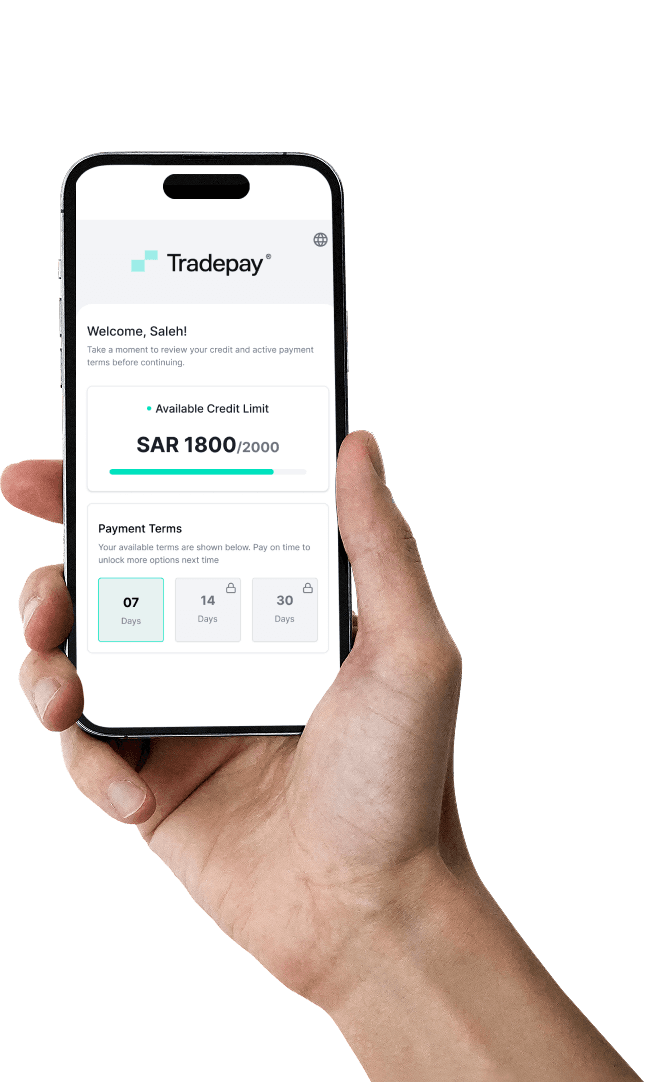
Shari’a-Compliant Trade Model

Inventory sold on deferred invoice terms
Trusted by Merchants
95% on-time invoice settlement across merchants
Trusted by Merchants
95% on-time invoice settlement across merchants
Smarter FMCG sourcing for everyday trade
Tradepay helps small merchants source FMCG inventory through a simple B2B trading platform. Merchants purchase goods from Tradepay and settle invoices on deferred commercial terms aligned with inventory cycles.
Smarter FMCG sourcing for everyday trade
Tradepay helps small merchants source FMCG inventory through a simple B2B trading platform. Merchants purchase goods from Tradepay and settle invoices on deferred commercial terms aligned with inventory cycles.
Built for Traditional Trade
Tradepay supports FMCG and distributor-led trade categories such as lubricants, packaged food, beverages, and other repeat-purchase inventory. By trading directly with merchants, Tradepay helps suppliers and distributors reach more small retailers, increase sell-through, and simplify invoice-based trade.
Deferred Invoice Terms
Merchants purchase everyday stock from Tradepay and settle invoices on agreed deferred terms.

Deferred Invoice Terms
Merchants purchase everyday stock from Tradepay and settle invoices on agreed deferred terms.
Deferred Invoice Terms
Merchants purchase everyday stock from Tradepay and settle invoices on agreed deferred terms.
Trusted Trade Network
Built for responsible B2B trading with transparent invoices, order limits, and settlement tracking.

Invoice Visibility
Track purchases, invoice due dates, and payable amounts in one place.
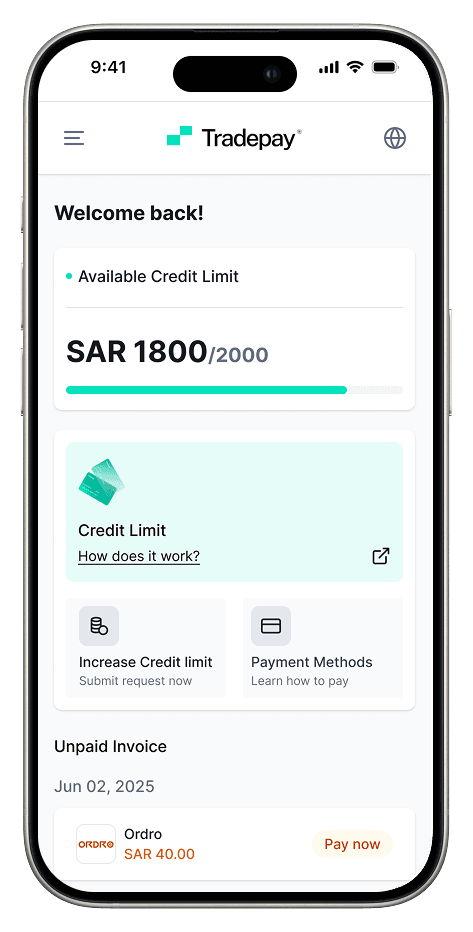
Invoice Visibility
Track purchases, invoice due dates, and payable amounts in one place.
Invoice Visibility
Track purchases, invoice due dates, and payable amounts in one place.
Grow FMCG Sales Through Tradepay
Tradepay buys inventory from suppliers and resells it to small merchants under agreed commercial invoice terms, helping suppliers reach more trade demand through one B2B trading partner.
For Marketplaces
Enable FMCG orders through Tradepay
Merchants can place inventory orders through Tradepay-enabled channels and settle invoices on deferred commercial terms.
Unlock flexible, Shari’a-compliant payment terms
Increase merchant order consistency and repeat purchasing
Sell inventory to Tradepay under agreed commercial supply terms
For Marketplaces
Enable FMCG orders through Tradepay
Merchants can place inventory orders through Tradepay-enabled channels and settle invoices on deferred commercial terms.
Unlock flexible, Shari’a-compliant payment terms
Increase merchant order consistency and repeat purchasing
Sell inventory to Tradepay under agreed commercial supply terms
For Distributors and Suppliers
Predictable Trade, Cleaner Operations
Tradepay enables suppliers and distributors to sell inventory to Tradepay, while Tradepay manages resale to grocery retailers under deferred commercial invoice terms. Teams get visibility over orders, invoices, and settlement status.
chasing Faster routes, more stops: reps sell inventory through a clear B2B trade flow
Tighter operations: order limits, invoices, and settlement status in one system
Controlled trade: clear invoice visibility and predictable settlement
For Distributors and Suppliers
Predictable Trade, Cleaner Operations
Tradepay enables suppliers and distributors to sell inventory to Tradepay, while Tradepay manages resale to grocery retailers under deferred commercial invoice terms. Teams get visibility over orders, invoices, and settlement status.
chasing Faster routes, more stops: reps sell inventory through a clear B2B trade flow
Tighter operations: order limits, invoices, and settlement status in one system
Controlled trade: clear invoice visibility and predictable settlement
Grow FMCG Sales Through Tradepay
Tradepay buys inventory from suppliers and resells it to small merchants under agreed commercial invoice terms, helping suppliers reach more trade demand through one B2B trading partner.
For Marketplaces
Enable FMCG orders through Tradepay
Merchants can place inventory orders through Tradepay-enabled channels and settle invoices on deferred commercial terms.
Unlock flexible, Shari’a-compliant payment terms
Increase merchant order consistency and repeat purchasing
Sell inventory to Tradepay under agreed commercial supply terms
For Distributors and Suppliers
Predictable Trade, Cleaner Operations
Tradepay enables suppliers and distributors to sell inventory to Tradepay, while Tradepay manages resale to grocery retailers under deferred commercial invoice terms. Teams get visibility over orders, invoices, and settlement status.
chasing Faster routes, more stops: reps sell inventory through a clear B2B trade flow
Tighter operations: order limits, invoices, and settlement status in one system
Controlled trade: clear invoice visibility and predictable settlement
How Tradepay Works
Tradepay connects to existing ordering workflows so merchants can purchase FMCG inventory from Tradepay with minimal operational disruption.
Step 1: Tradepay connects where inventory orders happen
Tradepay can connect with distributor ordering tools, SFA devices, and B2B marketplaces to receive merchant inventory orders.
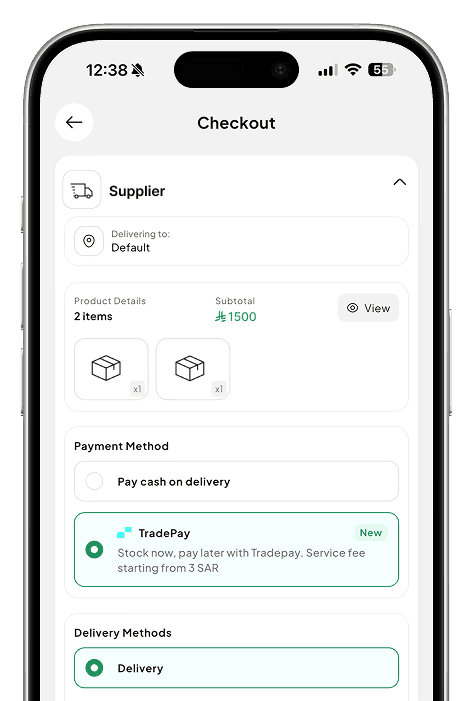
Step 2: Merchants select Tradepay at checkout
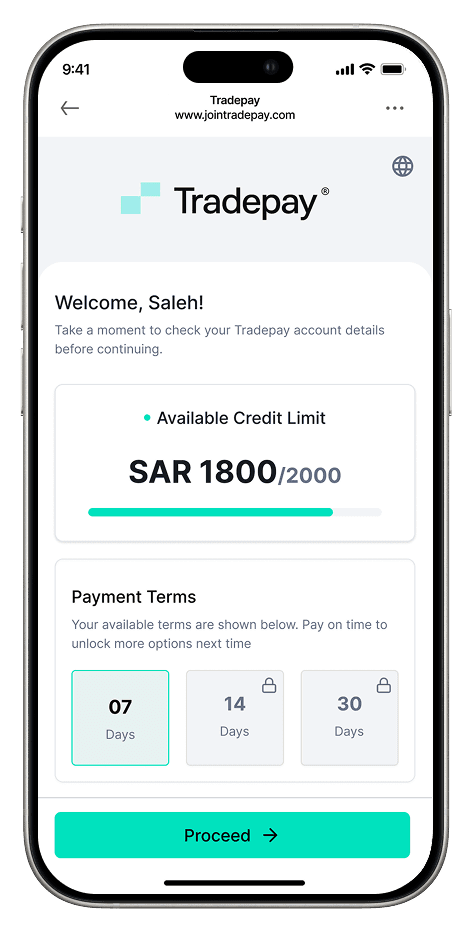
Merchants purchase eligible FMCG inventory from Tradepay and receive invoice due dates based on their approved purchasing limit.
Step 3: Tradepay buys, resells, and invoices
Tradepay purchases inventory from suppliers, resells goods to merchants, issues invoices, sends payment reminders, and tracks settlement.
How Tradepay Works
Tradepay connects to existing ordering workflows so merchants can purchase FMCG inventory from Tradepay with minimal operational disruption.
Step 1: Tradepay connects where inventory orders happen
Tradepay can connect with distributor ordering tools, SFA devices, and B2B marketplaces to receive merchant inventory orders.
Step 2: Merchants select Tradepay at checkout
Merchants purchase eligible FMCG inventory from Tradepay and receive invoice due dates based on their approved purchasing limit.
Step 3: Tradepay buys, resells, and invoices
Tradepay purchases inventory from suppliers, resells goods to merchants, issues invoices, sends payment reminders, and tracks settlement.
How Tradepay Works
Tradepay connects to existing ordering workflows so merchants can purchase FMCG inventory from Tradepay with minimal operational disruption.
Step 1: Tradepay connects where inventory orders happen
Tradepay can connect with distributor ordering tools, SFA devices, and B2B marketplaces to receive merchant inventory orders.
Step 2: Merchants select Tradepay at checkout
Merchants purchase eligible FMCG inventory from Tradepay and receive invoice due dates based on their approved purchasing limit.
Step 3: Tradepay buys, resells, and invoices
Tradepay purchases inventory from suppliers, resells goods to merchants, issues invoices, sends payment reminders, and tracks settlement.
Frequently Asked Questions
What is Tradepay?
Who can use Tradepay?
How does Tradepay work?
Is Tradepay Shari’a-compliant?
How are limits decided?
Frequently Asked Questions
What is Tradepay?
Who can use Tradepay?
How does Tradepay work?
Is Tradepay Shari’a-compliant?
How are limits decided?
Frequently Asked Questions
What is Tradepay?
Who can use Tradepay?
How does Tradepay work?
Is Tradepay Shari’a-compliant?
How are limits decided?